Where the tutorial ends, the flags begin.
Every article ships with the exact compiler version and flags used. No excerpts, no assumed context — code that compiles on the first paste.
Pick a language. Get the undocumented parts.
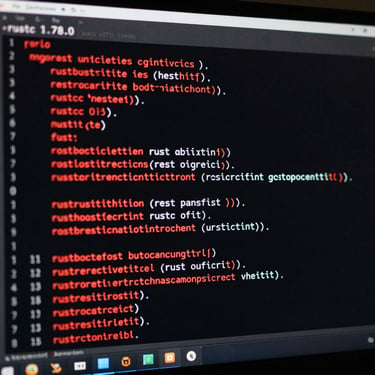
Rust
C
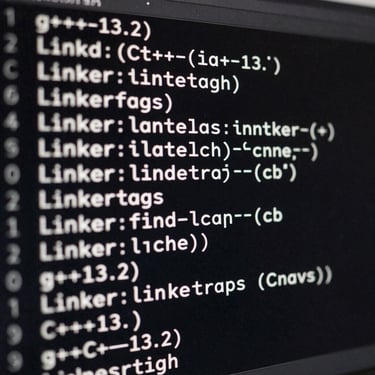
C++
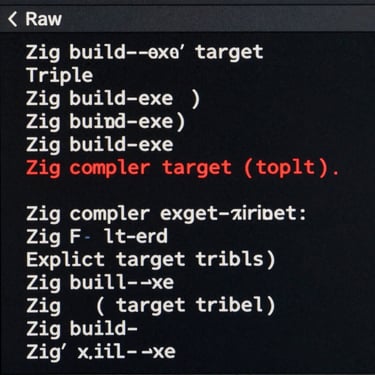
Zig
Lifetime edge cases, borrow-checker traps, and linker flags verified on stable and nightly. Version noted per article.
Undefined behavior traps, pointer aliasing rules, and gcc/clang flag differences — each tested, not inferred from the spec.
Template instantiation quirks, ODR violations, and ABI breaks — the behaviors that only surface at link time.
Comptime traps, cross-compilation target triples, and build system behavior that the official docs gloss over.
No excerpts. No assumed toolchain.
Each piece names the compiler, the flags, and the conditions under which the behavior was observed. If a version changes the outcome, that is noted — not buried in a comment.
Compiler version and flags, pinned
UB traps and linker quirks, named
Minimal, self-contained examples
Rust, C, C++, and Zig articles list the exact invocation used. If a flag changes behavior between versions, both are shown.
Undefined behavior, lifetime edge cases, and ODR violations most references treat as footnotes — covered here as the main event.
Code blocks compile as-is. No surrounding scaffolding, no header files you have to hunt down — paste and run.
The full documentation index is one level up.
Systems articles live under the broader docs library. Linux internals, kernel-version notes, and Arch references are indexed there too.